
Sleep is a recurring state of altered consciousness, imperative to normal brain and body function.
Approximately one third of our lives is spent asleep.
Every night, nearly every person undergoes a remarkable change: we leave waking consciousness and for hours traverse a landscape of dreams and deep sleep. When we wake, we typically remember little or nothing about the hours that have just passed. Except in rare instances, we never contemplate and appreciate that we are sleeping while we are asleep. Thus, although everyone sleeps, most people would be hard-pressed to precisely define sleep. All organisms exhibit daily patterns of rest and activity that resemble the daily sleep and wakefulness patterns seen in humans. From observing changes in behavior and responsiveness, scientists have noted the following characteristics that accompany and in many ways define sleep:
- Sleep is a period of reduced activity.
- Sleep is associated with a typical posture, such as lying down with eyes closed in humans.
- Sleep results in a decreased responsiveness to external stimuli.
- Sleep is a state that is relatively easy to reverse (this distinguishes sleep from other states of reduced consciousness, such as hibernation and coma).
From observations of behavioral changes that accompany sleep and simultaneous physiological changes, scientists now define sleep in humans based on brain wave activity patterns and other physiological changes as described below.
Following image describes stages of sleep:
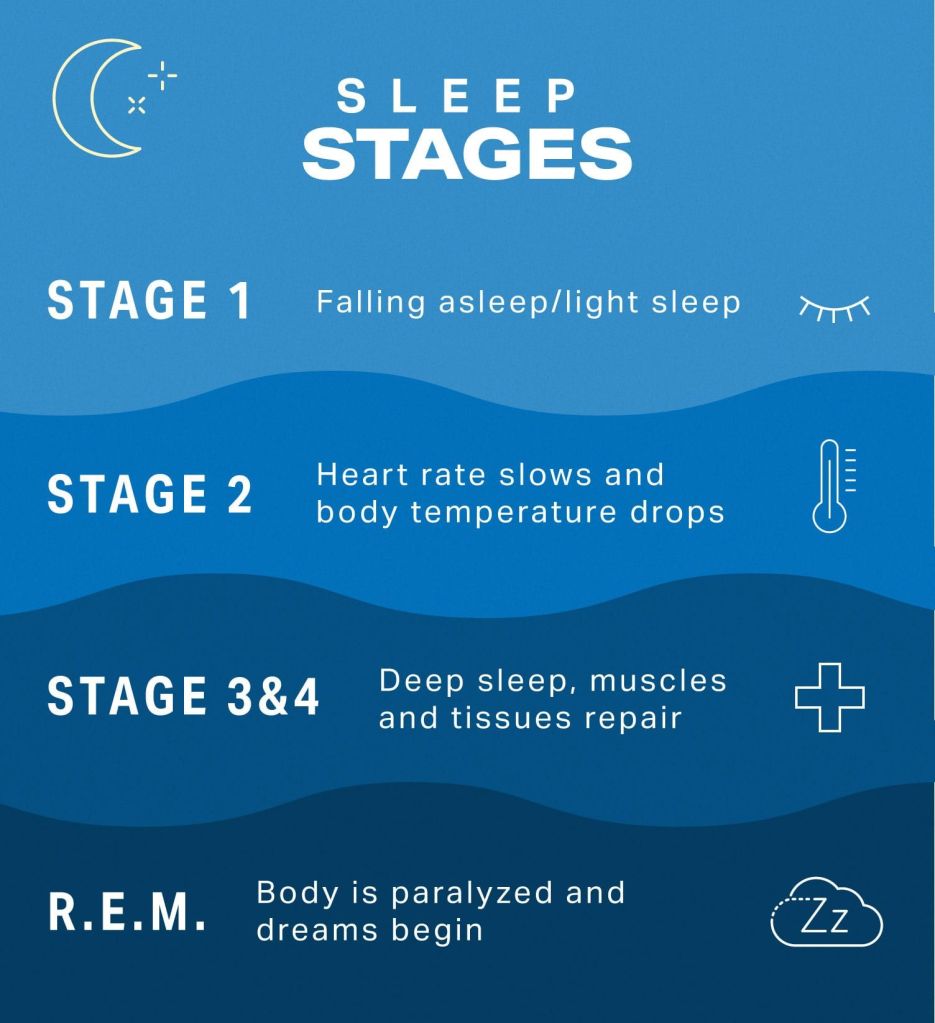
Physiological Changes During Sleep
Many physiological variables are controlled during wakefulness at levels that are optimal for the body’s functioning. Our temperature, blood pressure, and levels of oxygen, carbon dioxide, and glucose in the blood remain quite constant during wakefulness. During sleep, however, physiological demands are reduced and temperature and blood pressure drop. In general, many of our physiological functions such as brain wave activity, breathing, and heart rate are quite variable when we are awake or during REM sleep, but are extremely regular when we are in non-REM sleep.
Brain Activity
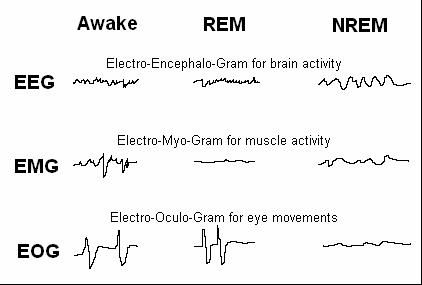
For centuries, physicians believed that sleep was a period of brain inactivity, yet research over the last 60 years has shown us that the brain remains active during sleep. There is a progressive decrease in the activation or “firing” rate of most neurons throughout the brain as sleep progresses from wakefulness to non-REM sleep. Also, the patterns of neuron firing change from a seemingly random and variable activity pattern during wakefulness, to a much more coordinated and synchronous pattern during non-REM sleep.
During REM sleep (the stage of sleep most associated with dreaming) there is an increase in the firing rate of most neurons throughout the brain, as compared to non-REM sleep. In fact, the brain in REM sleep can even be more active than when we are awake.
Sleep Disorders Affecting Human Health

The quality and quantity of sleep changes with age. Changes in sleep are believed to be due to changes in internal body rhythm (called Circadian Rhythm), emotional stress, physical illness and drugs. The chronic use of sedatives and hypnotics is not known to improve sleep. On the contrary they are implicated in many of the Dyssomnias . Due to slow metabolism the elderly tend to accumulate more of the sedatives in their bodies which may lead to delirium, daytime drowsiness and loss of equilibrium.
So briefly describing the sleep disorders below to get to our main concern i.e, how to maintain a healthy sleep pattern.

What is sleep hygiene?
Sleep hygiene is a variety of different practices and habits that are necessary to have good nighttime sleep quality and full daytime alertness.
Why is it important to practice good sleep hygiene?
Obtaining healthy sleep is important for both physical and mental health. It can also improve productivity and overall quality of life. Everyone, from children to older adults, can benefit from practicing good sleep habits.
How can I improve my sleep hygiene?

One of the most important sleep hygiene practices is to spend an appropriate amount of time asleep in bed, not too little or too excessive. Sleep needs vary across ages and are especially impacted by lifestyle and health. However, there are recommendations that can provide guidance on how much sleep you need generally. Other good sleep hygiene practices include:
- Limiting daytime naps to 30 minutes. Napping does not make up for inadequate nighttime sleep. However, a short nap of 20-30 minutes can help to improve mood, alertness and performance.
- Avoiding stimulants such as caffeine and nicotine close to bedtime. And when it comes to alcohol, moderation is key4. While alcohol is well-known to help you fall asleep faster, too much close to bedtime can disrupt sleep in the second half of the night as the body begins to process the alcohol.
- Exercising to promote good quality sleep. As little as 10 minutes of aerobic exercise, such as walking or cycling, can drastically improve nighttime sleep quality. For the best night’s sleep, most people should avoid strenuous workouts close to bedtime. However, the effect of intense nighttime exercise on sleep differs from person to person, so find out what works best for you.
- Steering clear of food that can be disruptive right before sleep. Heavy or rich foods, fatty or fried meals, spicy dishes, citrus fruits, and carbonated drinks can trigger indigestion for some people. When this occurs close to bedtime, it can lead to painful heartburn that disrupts sleep.
- Ensuring adequate exposure to natural light. This is particularly important for individuals who may not venture outside frequently. Exposure to sunlight during the day, as well as darkness at night, helps to maintain a healthy sleep-wake cycle.
- Establishing a regular relaxing bedtime routine. A regular nightly routine helps the body recognize that it is bedtime. This could include taking warm shower or bath, reading a book, or light stretches. When possible, try to avoid emotionally upsetting conversations and activities before attempting to sleep.
- Making sure that the sleep environment is pleasant.Mattress and pillows should be comfortable. The bedroom should be cool – between 60 and 67 degrees – for optimal sleep. Bright light from lamps, cell phone and TV screens can make it difficult to fall asleep4, so turn those light off or adjust them when possible. Consider using blackout curtains, eye shades, ear plugs, “white noise” machines, humidifiers, fans and other devices that can make the bedroom more relaxing.
Do’s and Don’ts Of Sleep Hygiene
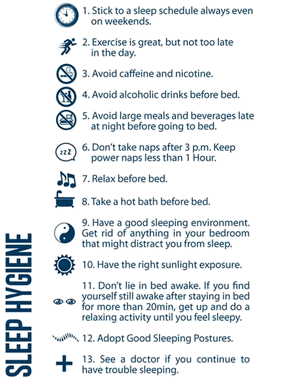
ADOPT THESE FOR HEALTHY SLEEP
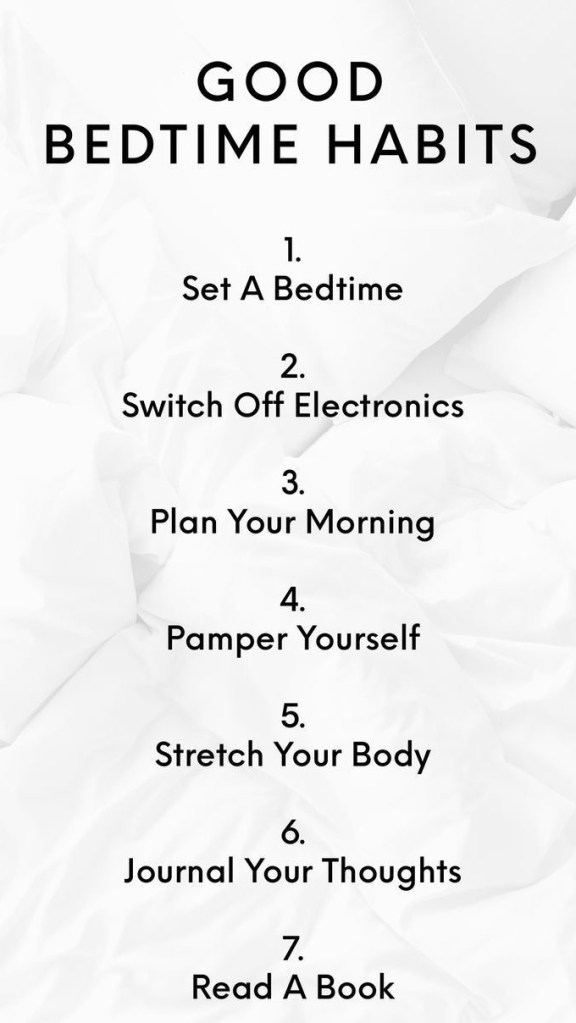
SOME MORE TIPS !
_Don’t forget to think about interesting opportunities to learn something new.
_Brush and floss your teeth regularly (do Siwak more preferable).
_Spend time with your friends and family whenever you have the chance.
_Do not take medicine unless you are sure you need it.
_Do not use a microwave
_Keep praying and have faith.
_And last but not the least
Do SMILE more often 🙂
See you in the best of faith soon!
 Treasures of Healthy Life
Very informative blog.
LikeLike